
|
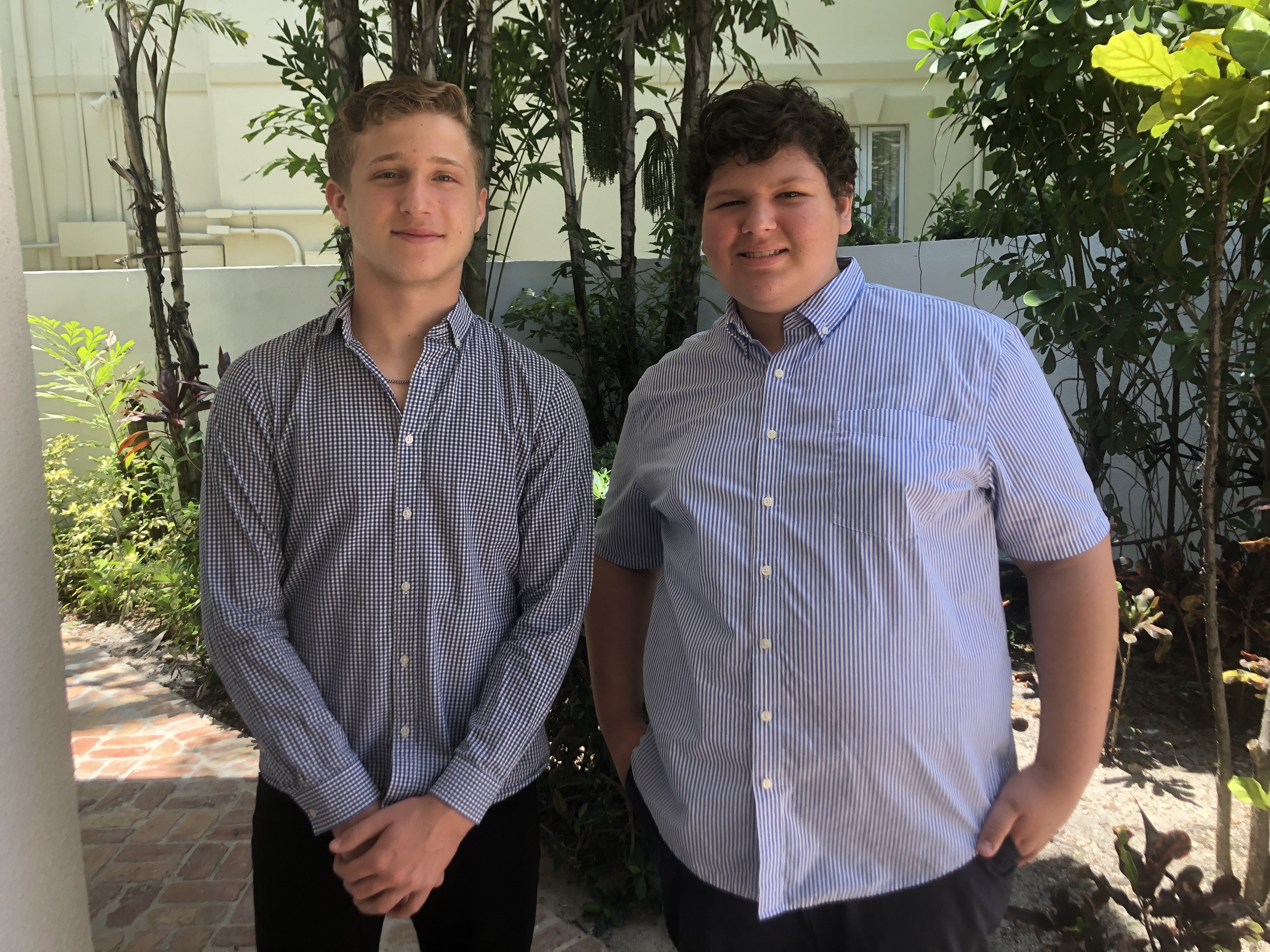
Nachi Rosen and Judah Roberts
|
|
|
Product Description
We have created a device to assist the visually impaired when they are walking so that they do not hit any objects in their path. The device is called 'The Torch' and is a headband that can be worn on the head or over a hat. It sends out a signal to measure how far an object is and beeps when an item is five feet away.
|
The ProblemMany blind or visually impaired people use walking dogs or sticks to assist them in knowing when an object is in their path when they're walking. Neither of these devices are very effective in measuring how far an item is away from them or whether the item will hit their head (like a branch, sign, pipe etc.). We created a device that will detect such obstacles and help them maneuver around them. We named our product 'The Torch' because just like a torch of light provides light in the darkness, our device provides clarity to the visually impaired by informing them when there is an obstruction in their walking path. Background and Market Research What products are there currently to help the blind? |
Construction and TestingOur prototype was constructed by attaching an ultrasonic range detector and two sound buzzers to an Arduino logic board. When the sensor detects an object away that is five feet or less, the buzzers are activated. The sound buzzers are located near both ears and volume adjusted not to be too loud for the user. 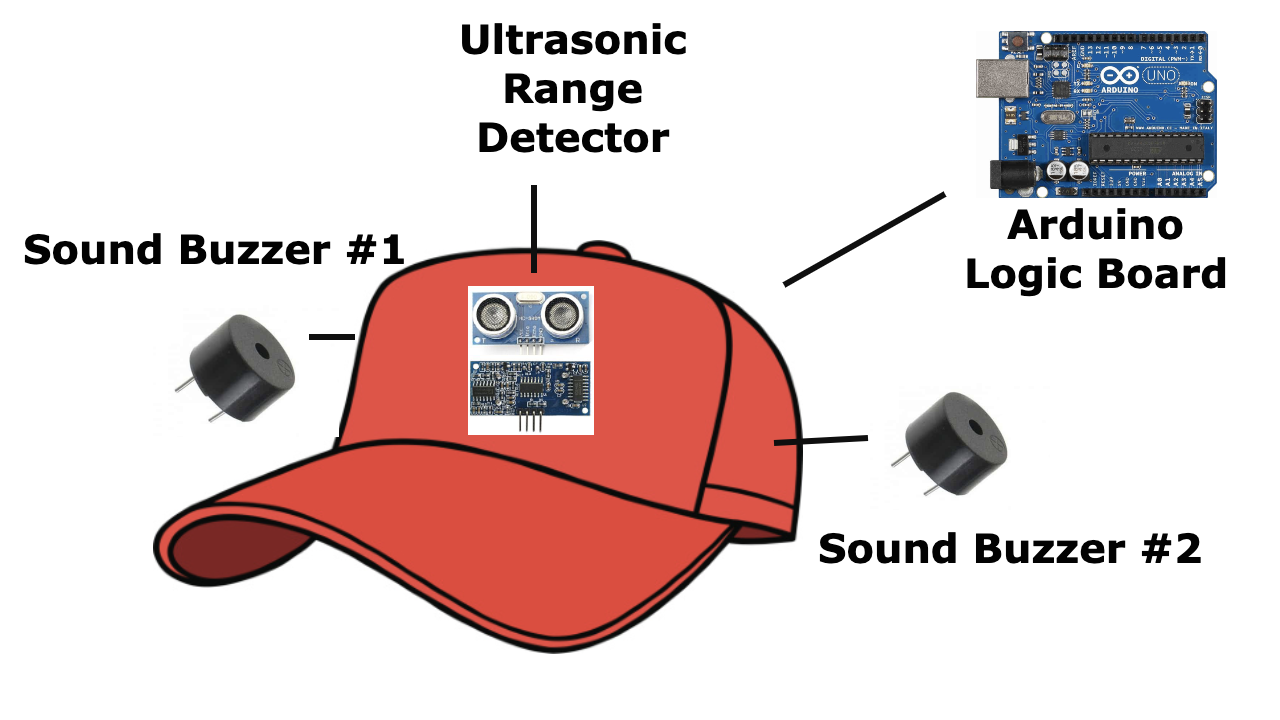 Watch the video below to get a 360 degree view of the device, complete with the Arduino board, buzzers and range detector. |
Circuit and Dataflow DiagramDiscussion Limitations: Future WorkRight now, our prototype still has the wires and arduino board visible to the naked eye. In the future, we will want to 3D print a cover to encapsulate the wires and board so that it will be more aesthetically pleasing. Also, if we really wanted to make this device innovative, we would add some artificial intelligence that would be able to determine using geometric AI which object lies in front of them (A chair? A table? A person? Etc.) References
[1]
Tools of the Blind and the Visually Impaired AcknowledgementsWe would like to thank our parents, our siblings and teachers at KYHS for all their support during our development of this project. |
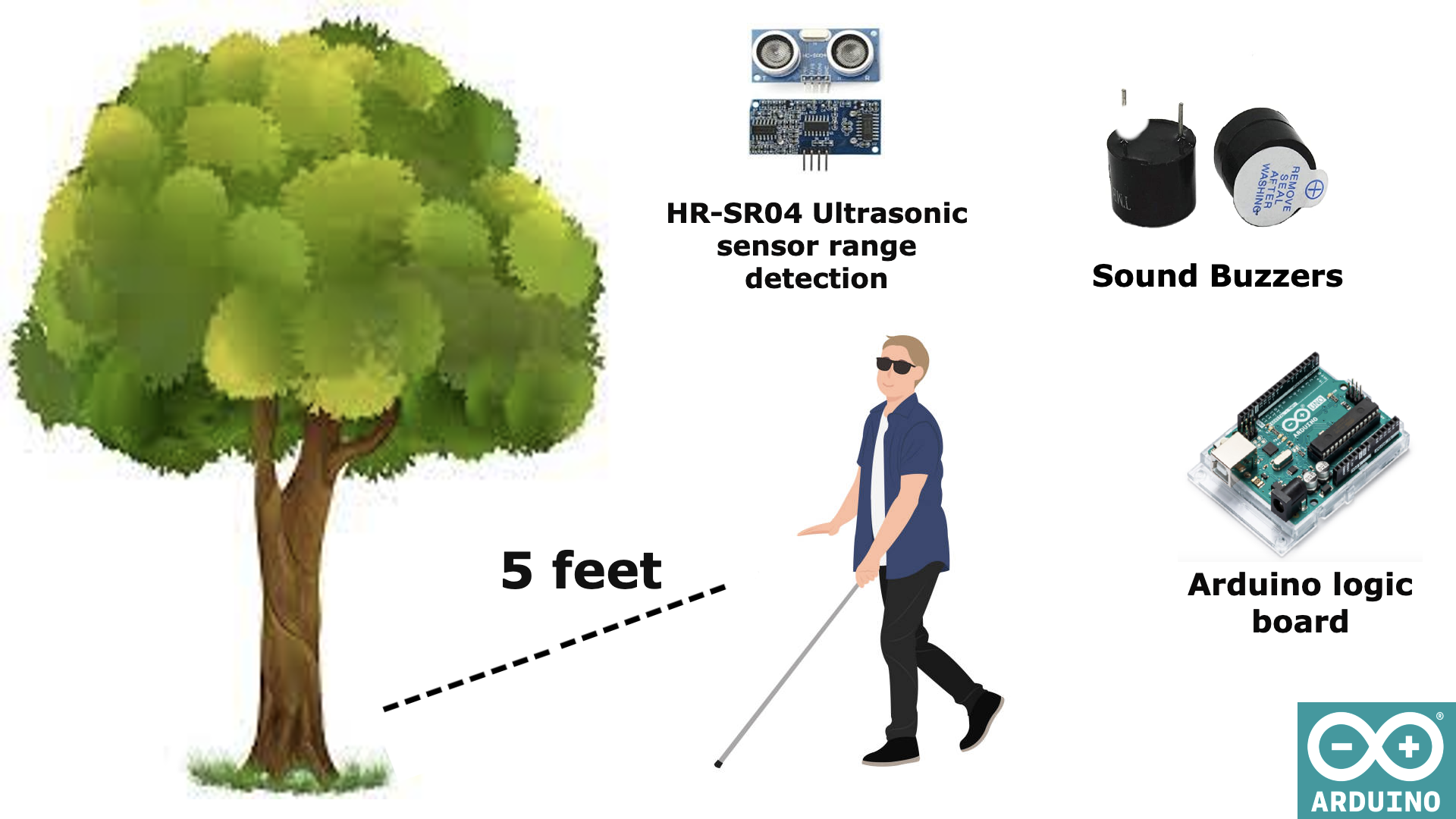 The headband beep progressively faster as you get closer to the object. In this way it is able to assist a blind or visually impaired person as they are walking and warn them audibly so that they won't bump into an object.